Google's AI Endgame Is the Interface
TLDR
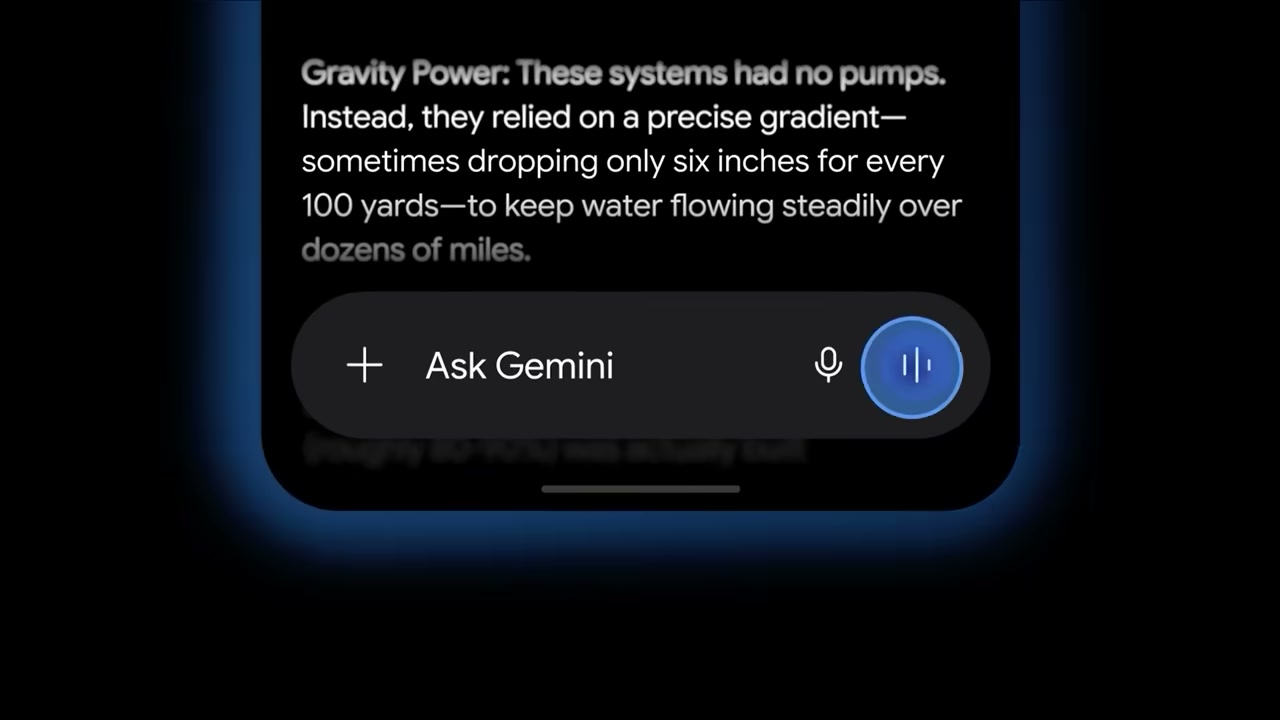
Google's AI strategy is to make Gemini the first interface for intent across Search, Android, Chrome, code, video, and daily work.
I/O 2026 made Gemini look like Google's attempt to own intent across Search, Android, Chrome, code, video, and every screen where a user decides what to do next.
TLDR
Google's I/O 2026 AI strategy is a full-stack interface strategy. The company is pairing custom inference infrastructure, Gemini models, generated UI, AI Mode in Search, Android distribution, Chrome, Antigravity, and media tools so Gemini can catch intent before it becomes a search query, app session, or coding task.
The old Google habit was simple: ask, scan links, click away. That habit worked because the web was too large for memory and too fragmented for direct navigation. Google became the routing layer between a question and the rest of the internet.
the source's I/O 2026 recap turns that old habit into the tension of the event. Under the jokes, the source video makes a sharp point: Google is moving from organizing information toward owning the surface where intent first appears. Google's official language is calmer. Sundar Pichai calls it the "agentic Gemini era". The product shape is the same either way.
Google wants the moment before search.
The product is the first surface
The official I/O announcement list reads like a crowded launch page: Gemini 3.5 Flash, Gemini Omni, Neural Expressive, AI Mode, Antigravity, Flow, Veo, Android, Chrome, AI Studio, and more. The list feels scattered until it is read as a stack.
The stack starts with compute, moves through models, lands in interfaces, then spreads into distribution. Search gives Google demand. Android gives it a pocket surface. Chrome gives it a browser surface. Gmail, Calendar, YouTube, Maps, and developer tools give it work surfaces. Gemini becomes valuable when it appears inside those surfaces before a competing assistant becomes the user's default starting point.
The old search result sent people somewhere else. The new interface can answer, summarize, draft, generate, compare, code, and act inside the first surface. That changes the power structure. The ranking page used to decide where attention went next. The agent layer can decide what work even becomes visible.
Scale turns demos into infrastructure
the source's most useful number is the least cinematic one: Google went from serving 9.7 trillion tokens per month to 3.2 quadrillion tokens per month in two years, according to the video video. Numbers at that scale change the category. AI stops looking like a feature and starts looking like a utility bill with a product roadmap attached.
Every answer, rewrite, video, agent step, code repair, and generated surface consumes inference. A company can win a benchmark and still lose the product if it serves that intelligence too slowly or too expensively. The TPU thread matters because Google has always become most dangerous when a consumer product turns into an infrastructure problem.
Search was infrastructure. Ads became infrastructure. Maps, YouTube, and Android became distribution infrastructure. AI pushes the same pattern into model serving. Google's I/O story pairs model launches with TPU 8i and separate training and inference work because the cost curve decides how often Gemini can appear without feeling scarce.
Interface ownership needs cheap repetition.
Generated UI is the actual wedge
Gemini Omni is the cleanest expression of the interface strategy. Google describes it as a model that can create from any input and produce multiple forms of output, starting with video and stronger world understanding. In practice, this points toward one surface that can move between text, image, audio, video, diagrams, and tools.
The more important detail is Neural Expressive, the Gemini app's design direction for responses that can arrange themselves as timelines, diagrams, interactive visuals, and generated UI elements. A page has a stable layout. A generated interface can assemble the layout around the job.
That matters for search. A user who asks for a travel comparison may need a map, a calendar, a budget, weather, refund rules, and a checklist. A user debugging a codebase may need diffs, failing tests, logs, and a dependency graph. A user researching a purchase may need sources, options, constraints, and a decision trail. Ten blue links can still help, but the more direct product is a temporary workbench.
The interface becomes the answer when it carries the state, sources, controls, and next action in one place.
Antigravity shows the same shift in code
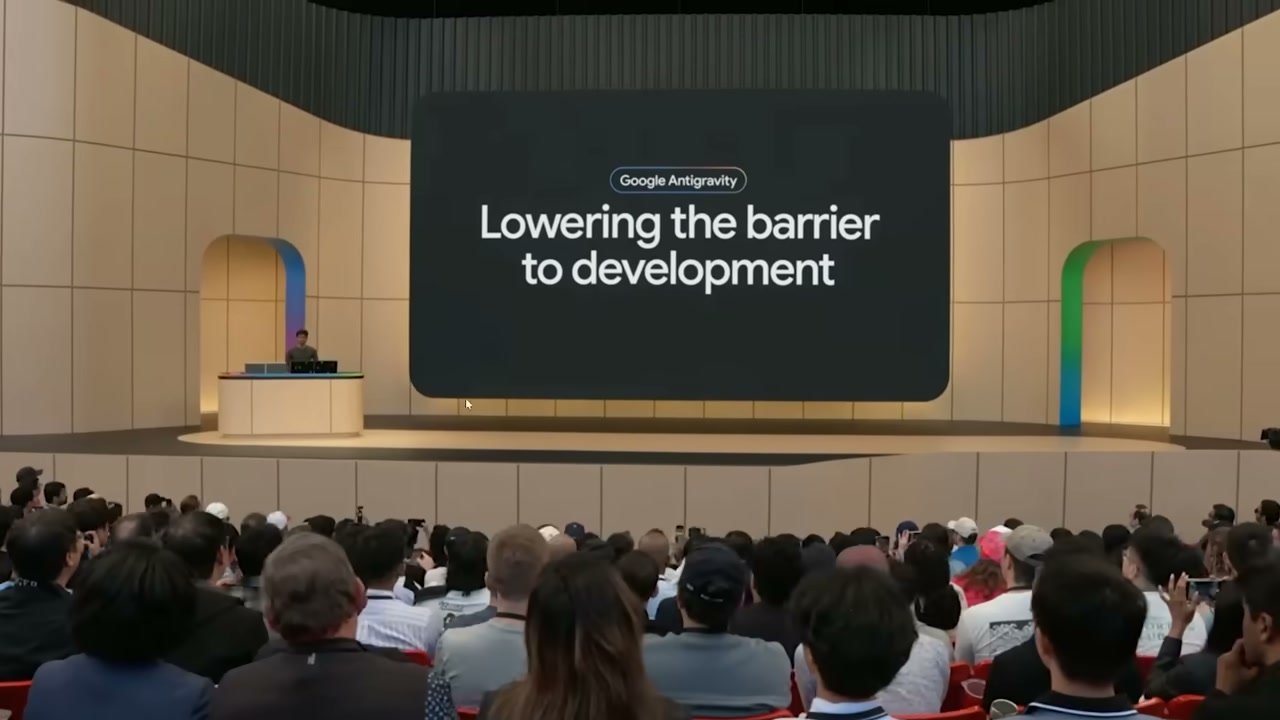
The developer keynote makes the strategy smaller and easier to inspect. Google's developer recap frames Antigravity as an agent-first development platform with upgraded orchestration and agent-building capabilities. the source's read is blunter: the IDE is turning from a typing surface into an agent management surface.
That shift creates a new job for the programmer. The human moves from producing every line to defining the target, reading the artifact, choosing tests, and rejecting fake progress. Speed helps only when the loop has a bounded output and a failure signal outside the model's own confidence.
The Doom demo carries the point because it has an object, a break, and a repair. The tool builds an operating system, Doom fails because drivers are missing, Gemini writes the driver code, and the game runs. The demo works as a story because the artifact moves from broken to running.
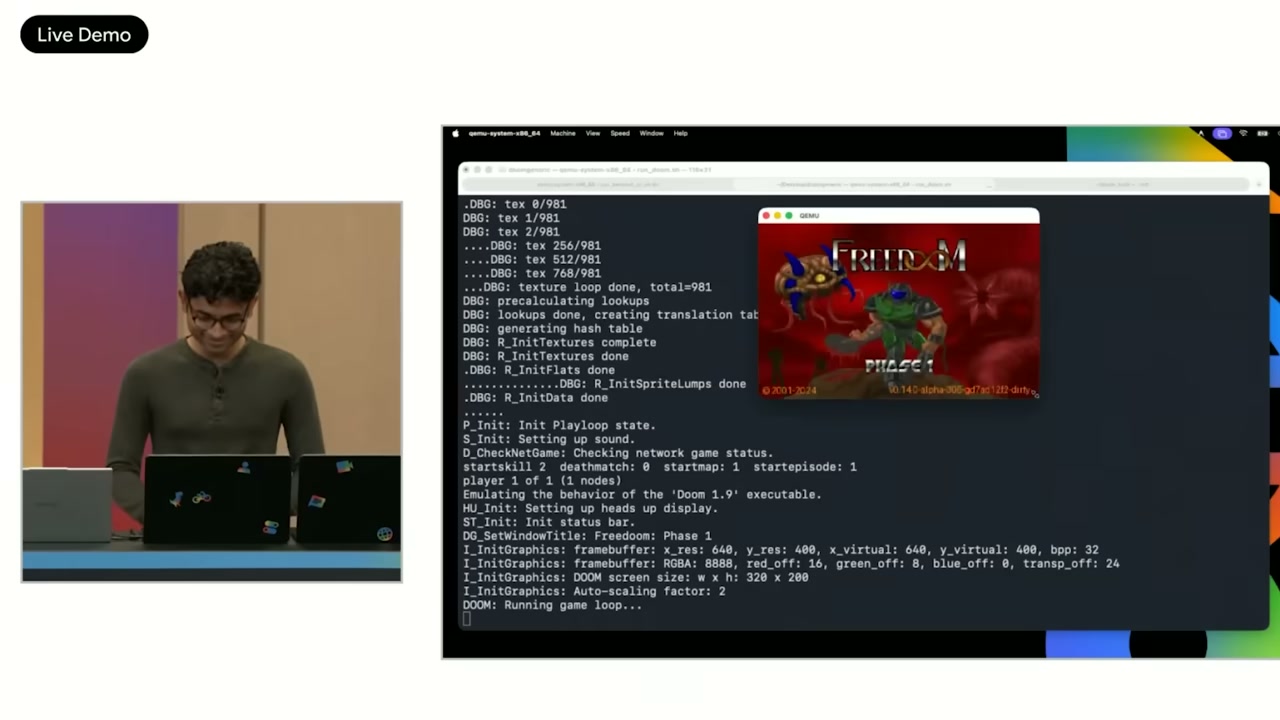
The operating rule for coding agents is direct: score the closed loop. The useful loop has an artifact, a failing test or runtime symptom, a patch, and a human decision about whether the result matters. Token volume alone is noise.
Price reveals the product boundary
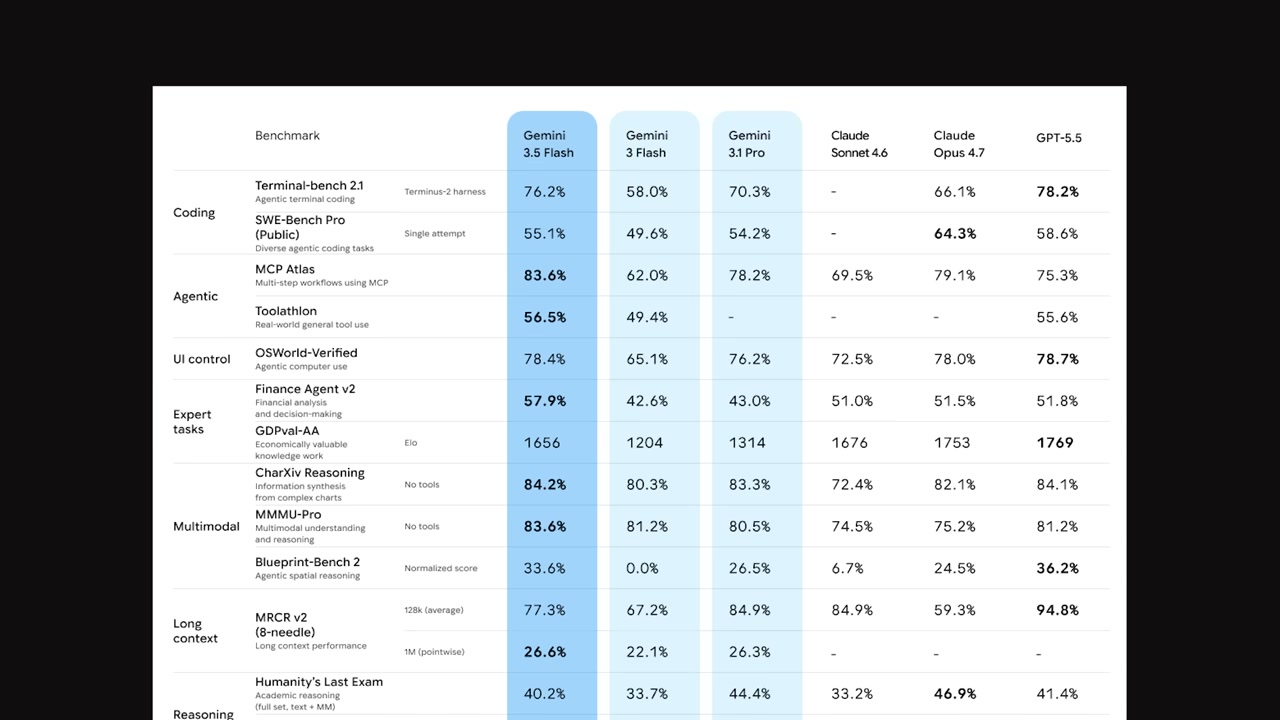
the source also points to the cost side of the story. Gemini 3.5 Flash is framed as faster and stronger, while the source notes a higher price than earlier Flash generations. The exact pricing will keep moving, but the direction is clear: intelligence is becoming a metered product surface.
Consumer AI trained people to expect a lot of magic at software margins. Agentic AI behaves more like cloud infrastructure. Latency, context, image generation, video generation, tool calls, background agents, and long-running code tasks all create cost. The more Google puts Gemini inside daily surfaces, the more pricing becomes product design.
Free tiers create habit. Paid tiers finance repetition. Enterprise tiers buy control, auditability, and predictable limits. The interface layer only becomes default if Google can make the economics feel boring at massive scale.
HTML on Canvas is the quiet developer clue
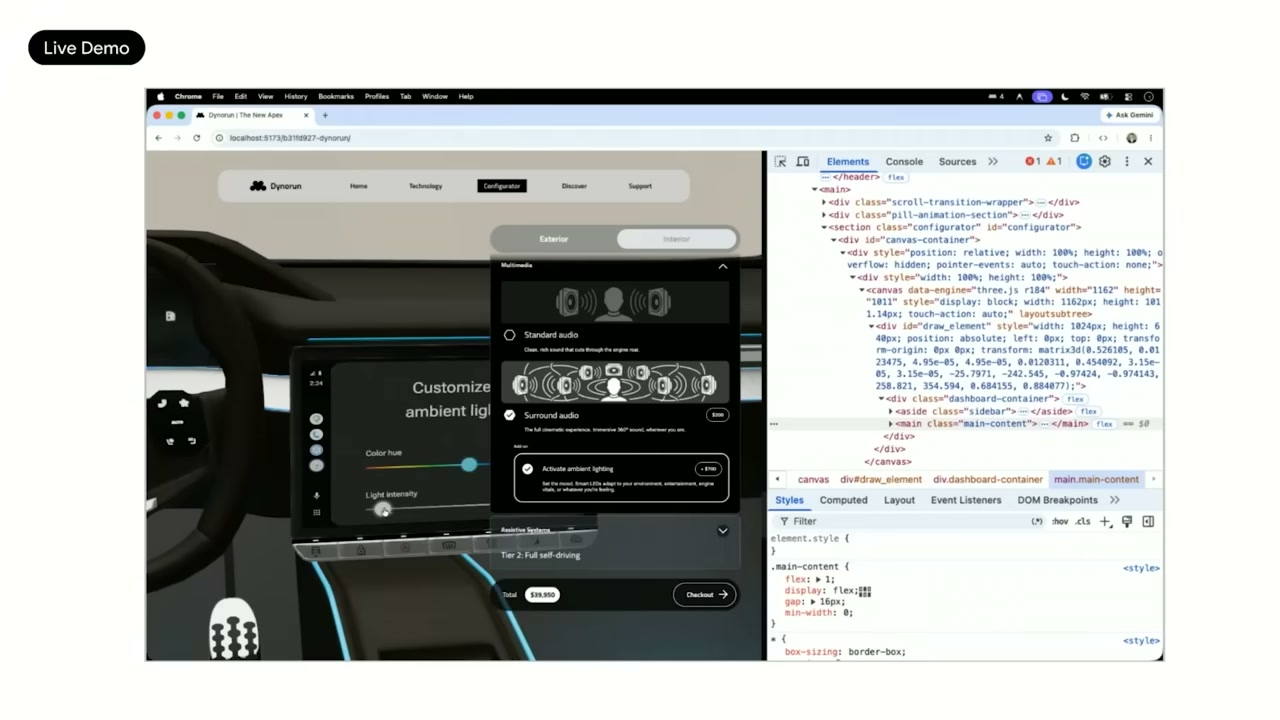
The most practical developer announcement in the source's recap may be HTML on Canvas. It sounds small beside world models and agentic IDEs, but it points at the same interface problem from the platform side.
Developers want pixel-level control from Canvas, WebGL, and WebGPU. Users still need the boring affordances of HTML: text, inputs, focus, selection, accessibility, forms, browser behavior, and years of platform expectations. Generated interfaces will fail in production if they turn every useful surface into an inaccessible screenshot.
HTML on Canvas matters because generated UI still needs inspection, input, accessibility, and repair. If Gemini or any model can assemble an interface at the moment of intent, the web platform needs primitives that keep those surfaces usable by real people with keyboards, slow devices, assistive tools, and bug reports.
Magic still needs handles.
The trust problem moves into the interface
Google's strategic advantage is distribution. Search demand, Android, Chrome, YouTube, Gmail, Maps, custom chips, research labs, and cloud infrastructure give Gemini places to appear. The same distribution makes the trust problem sharper.
A ranked link list was already powerful. An answer layer is stronger. An action layer is stronger again. When an assistant summarizes a source, buys a product, writes code, books a trip, or builds an interface, the audit trail has to move with the action.
The practical test is simple. Does the system show sources when facts matter? Does it expose constraints before it acts? Does a generated UI preserve underlying state? Does a coding agent close against tests? Does the user still see meaningful alternatives? Does the cost stay legible when the task runs for minutes instead of seconds?
The agentic Gemini era will be judged by those controls more than by keynote density. Google has the pieces to make Gemini the first surface for many tasks. It also has the incumbent's hardest problem: the old interface still prints money while the new one learns to replace it.
Search organized the web after a person formed a question. Google's AI endgame is the layer that catches intent earlier, builds the working surface, and keeps the user inside the decision path.
For a useful next read, try AI Agent Loops Need a Human Loop.
Related -> AI Agent Loops Need a Human Loop
About the author
Max Petrusenko writes about AI agents, safety controls, and the incentives that decide whether powerful tools stay usable. Follow him on Medium, X, or LinkedIn.
Sources
- the source, Google's AI endgame is here... everything you missed at I/O 2026
- Google, 100 things we announced at I/O 2026
- Google, I/O 2026: Welcome to the agentic Gemini era
- Google Developers Blog, All the news from the Google I/O 2026 Developer keynote